
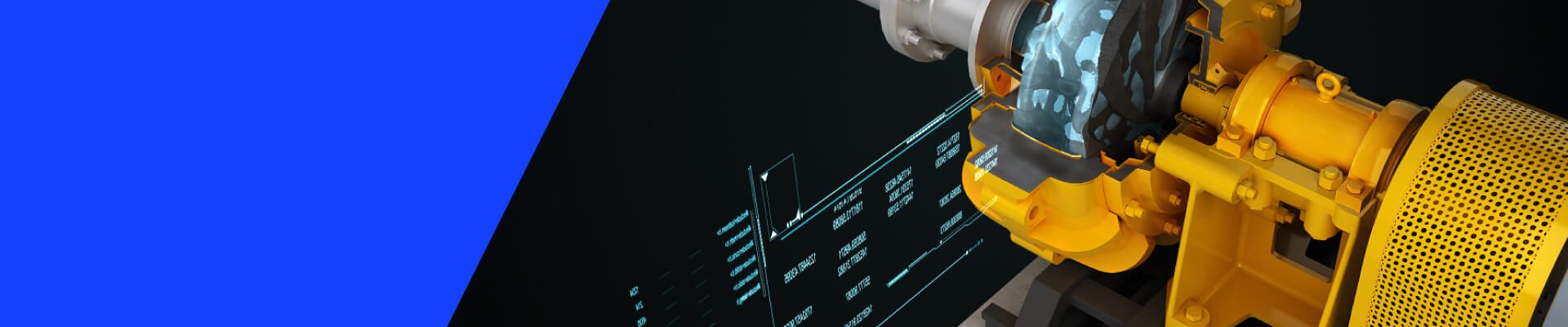
A slurry pump is a machine that transports fluid or pressurizes the fluid. It transmits the mechanical energy of the prime mover or other external energy to the liquid, thereby increasing the energy of the liquid. Unlike standard water pumps, slurry pumps must contend with abrasive solid particles, corrosive chemical compounds, and high-density mixtures — all of which place extraordinary stress on wetted components, especially the pump casing and guard plate.
A real-world case from a chemical processing company illustrates just how severe this challenge can be. The company operates two LCB300-300-3-450 slurry pumps and one LCB300-300-3-450 desulfurization pump, running at 980 r/min with a flow rate of 3,200 m³/h. The main conveyed medium is CaSO₄·2H₂O (calcium sulfate dihydrate, a common by-product in flue-gas desulfurization systems). The pump material is Cr30 (30% chromium white iron), yet despite the high-alloy construction, both the pump casing and guard plate suffer accelerated wear during normal operation. So how should engineers approach the erosion protection of slurry pump casings in such a demanding environment?
This article examines the root causes of casing erosion, compares protection and repair strategies, and shares practical guidance on extending service life — both through advanced material technologies and disciplined daily maintenance.
Why Do Slurry Pump Casings Wear So Quickly?
Understanding the failure mechanism is the first step toward effective protection. Wear in slurry pump casings is typically caused by two overlapping phenomena:
Particle impact erosion occurs when solid particles suspended in the slurry strike the casing wall at high velocity. The angle and frequency of impact determine how aggressively material is removed from the surface. In centrifugal slurry pumps, the rotating impeller accelerates the slurry outward, and particles continuously bombard the volute casing at varying angles.
Sliding abrasion (scouring) happens when particles drag along the internal surfaces rather than striking them head-on. This is particularly common near the guard plate and in zones of turbulent flow, where slurry recirculates or changes direction. Both mechanisms act simultaneously, making the casing a high-risk zone for material loss.
In the case of CaSO₄·2H₂O slurry, the crystalline nature of the particles and the relatively high flow rate (3,200 m³/h) compound the problem significantly. Even Cr30 — a premium wear-resistant alloy — cannot indefinitely resist this combined attack without protection measures in place.
1. Choosing the Right Material for Wear Resistance from the Start
Before addressing repair, it is worth noting that long-term protection starts at the design and procurement stage. The base material of the pump casing has a direct impact on service life. Common options include:
-
High-chromium white iron (e.g., Cr26, Cr30): The industry standard for highly abrasive slurries. Cr30 alloy, as used in this case, offers excellent hardness but can still be overcome by severe scouring conditions or chemical attack.
-
Natural rubber lining: Effective for fine-particle slurries at relatively lower velocities. Rubber absorbs impact energy rather than resisting it rigidly, reducing wear under specific conditions. It is less suitable for coarse, sharp particles or elevated temperatures.
-
Polyurethane lining: Offers a middle ground between metal and rubber, with good abrasion resistance and some chemical resistance. Often used for guard plates and impellers in moderate-duty applications.
-
Ceramic composite liners: Alumina and silicon carbide ceramics offer outstanding hardness and can dramatically extend service life in extremely abrasive environments. They are more brittle than metals and must be installed carefully to avoid impact fracture.
Selecting the right combination of materials for the specific slurry characteristics — including particle size, concentration, hardness, and pH — is essential. A pump well-matched to its application from day one will require far fewer costly interventions later.
2. Comparison of Protection and Repair Strategies for Slurry Pump Casings
When casing wear has already occurred, operators face a choice between several remediation approaches. Each has distinct trade-offs in terms of cost, downtime, and resulting service life.
(1) Component Replacement (Traditional Method)
The most straightforward response to casing wear is to replace the damaged part entirely. However, this approach carries significant drawbacks when dealing with high-alloy components like Cr30 casings. The sealing cavity and internal geometry must match precisely, and sourcing the correct replacement castings — particularly for larger pump models — can take considerable lead time.
More critically, if traditional repair welding is attempted, the technician must first identify the exact alloy composition of the casing and then source a compatible filler material. High-chromium white iron is notoriously difficult to weld without cracking, often making this route impractical. In practice, companies are frequently forced to simply order new casings — at high cost — and accept a service life of only around two months before the cycle repeats. This dramatically increases production costs and unplanned downtime.
(2) Carbon Nanopolymer Composite Coating
Advanced polymer composite technologies offer a compelling alternative. Products formulated from carbon nanopolymer materials combine high wear resistance, strong mechanical adhesion, and resistance to mild chemical attack. The coating is applied directly to the worn area without removing the entire pump from service, dramatically reducing both repair time and labour costs.
Key advantages include:
-
No need to dismantle the entire pump assembly
-
Repair cost is a fraction of casing replacement
-
Achievable service life equals or exceeds that of new cast components
-
The smooth, dense coating surface reduces turbulence and subsequent scouring
(3) Thermal Spray and High-Velocity Coating Technologies
For operations seeking a more permanent metallurgical bond, thermal spray processes such as High-Velocity Oxygen Fuel (HVOF) deposition can apply extremely dense, hard coatings — including tungsten carbide and chromium carbide — directly onto worn surfaces. These coatings achieve near-zero porosity and bond strength that rivals the substrate material itself.
While the equipment investment and application expertise required are higher, HVOF-coated surfaces can withstand both abrasion and impact forces that would quickly degrade softer polymer coatings. This approach is particularly suitable for critical casings that handle coarse, high-velocity slurries where downtime is prohibitively expensive.
(4) Replaceable Wear Liner Systems
Another increasingly common strategy is to fit the casing interior with replaceable wear liner inserts made from abrasion-resistant alloys, rubber, or ceramic composites. Rather than repairing or replacing the structural casing itself, operators simply swap out the liner when it reaches the end of its service life. This approach decouples the high-value structural casing from the sacrificial wear zone, significantly reducing lifecycle costs.
3. Step-by-Step: The Erosion Protection Process for the Slurry Pump Casing
The following procedure details the on-site application of carbon nanopolymer composite protection to a worn pump casing — a proven approach that minimises downtime while delivering durable results:
-
Step 1 – Clean the surface thoroughly. Flush the pump casing with steam and clean water to remove all residual slurry media. Any trapped CaSO₄ deposits must be fully dissolved or mechanically removed, as contamination will prevent proper coating adhesion.
-
Step 2 – Mechanical surface preparation. Use sandblasting or angle grinder tools to abrade the worn area, exposing the original bare metal. The goal is to achieve a uniform anchor profile (typically Sa 2.5 per ISO 8501-1 standards) that gives the coating material a surface to grip mechanically.
-
Step 3 – Remove dust and debris. After abrasion, use compressed air or clean lint-free cloths to remove all particulate matter. Even fine dust can create voids beneath the coating.
-
Step 4 – Prepare the composite material. Mix the carbon nanopolymer compound precisely according to the manufacturer's ratio. Incorrect mixing ratios will compromise curing and final hardness.
-
Step 5 – Apply the coating. Apply the prepared material to the repair area in dense, overlapping passes. Build up material gradually to achieve a smooth, even surface that restores the original casing profile. Pay particular attention to high-wear zones at the impeller discharge and around the guard plate perimeter.
-
Step 6 – Allow full curing, then reassemble. Once the coating has fully cured to the manufacturer's specified strength, reinstall the rotor and impeller and return the pump to service. Do not rush the curing phase — premature loading will compromise coating integrity.
4. Optimising Operating Conditions to Reduce Casing Wear
Even the best protective coatings and materials will wear prematurely if the pump is operating outside its intended design envelope. Several operational adjustments can meaningfully reduce the rate of casing erosion:
-
Match the pump to its Best Efficiency Point (BEP). Slurry pumps operating far from their BEP experience higher turbulence, recirculation, and uneven flow patterns — all of which accelerate wear. Regularly verify that flow rate and head align with the pump's design curve.
-
Control slurry concentration and particle size. Where possible, limit the concentration of solids and avoid allowing oversized particles to enter the pump. Coarser, harder particles cause disproportionately greater damage per unit volume. Installing upstream screening or classification equipment is a sound investment in pump protection.
-
Adjust pump speed appropriately. Higher rotational speed increases particle impact velocity, which exponentially increases wear. If the process allows, running at a lower speed (supplemented by a slightly larger impeller diameter) can substantially reduce erosion rates without sacrificing throughput.
-
Check and manage impeller clearances. The gap between the impeller and guard plate must be set correctly and checked regularly. An excessive gap allows slurry to recirculate from the high-pressure side to the low-pressure side, increasing scouring of the casing interior and reducing pump efficiency simultaneously.
5. Daily Operation and Maintenance Recommendations for Slurry Pumps
Protective coatings and optimised operation will only deliver their full benefit when supported by disciplined, regular maintenance. The following practices form the foundation of an effective slurry pump maintenance programme:
-
Prevent blockages before they occur. Large particles, fibrous materials, or foreign objects entering the pump not only risk immediate blockage but can score the casing interior and damage the impeller in seconds. Install trash screens or bar grilles upstream of the pump suction. Inspect these regularly and clear any accumulation before it becomes a problem.
-
Replace wear parts on a planned schedule, not on failure. Waiting until a component fails entirely is the most expensive maintenance strategy. Establish replacement intervals for impellers, liners, guard plates, and shaft sleeves based on operating hours and slurry characteristics, and adhere to them rigorously. Predictive wear monitoring — including periodic thickness measurements of the casing wall — can help fine-tune these intervals over time.
-
Ensure precise clearance adjustment during assembly. Every time the pump is opened for maintenance, gaps and alignments must be restored to specification. Imprecise fitting leads to vibration, uneven wear, and accelerated bearing failure. Use feeler gauges and dial indicators to confirm correct assembly before returning the pump to service.
-
Maintain bearing lubrication and cleanliness. Slurry contamination of bearings is a leading cause of premature pump failure. When replacing bearings, ensure the assembly environment is clean and dry. Use only the specified lubricant grade, and replace it at recommended intervals. Consider sealed or shielded bearing designs in environments where contamination risk is high.
-
Monitor vibration and noise during operation. Abnormal vibration or changes in acoustic signature are early warning signs of impeller wear, cavitation, or bearing deterioration. Regular vibration monitoring — even with basic handheld equipment — allows operators to detect problems before they escalate into catastrophic failures or casing damage.
-
Inspect mechanical seals and gland packing regularly. A leaking seal allows slurry to migrate into the bearing housing, dramatically shortening bearing and shaft sleeve life. Check seal condition at every scheduled maintenance interval and replace packing or mechanical seal components before visible leakage begins.
Conclusion
Slurry pump casing erosion is one of the most persistent and costly challenges in chemical processing, mineral handling, and desulfurization operations. The combination of abrasive particle impact and continuous scouring means that even premium high-chromium alloy casings have a finite service life under demanding conditions.
The most effective protection strategy is multi-layered: start with the right material selection for the application, apply advanced wear-resistant coatings — such as carbon nanopolymer composites or HVOF thermal spray — to extend and restore service life, optimise operating conditions to reduce wear rates, and maintain the pump rigorously according to a planned schedule.
For the LCB300-300-3-450 pumps handling CaSO₄·2H₂O described in this case, switching from simple part replacement to a structured protection and maintenance approach has the potential to more than double casing service life, reducing both material costs and unplanned downtime significantly.
If you are looking for a high-performance slurry pump or need guidance on wear-resistant solutions for your specific application, feel free to visit our website. Our engineering team will provide a professional pump selection and quotation tailored to your process requirements as quickly as possible.
Further Reading
- 10 Popular Mining Pump Manufacturers and Suppliers in China
- 10 Popular Slurry Pump Manufacturers and Suppliers in the USA
- 10 Popular Slurry Pump Manufacturers and Suppliers in Africa
- 10 Popular Horizontal Pump Suppliers and Companies in the World
- 10 Popular Slurry Pump Manufacturers and Suppliers in China
- 10 Popular Slurry Pump Manufacturers and Suppliers in the World