
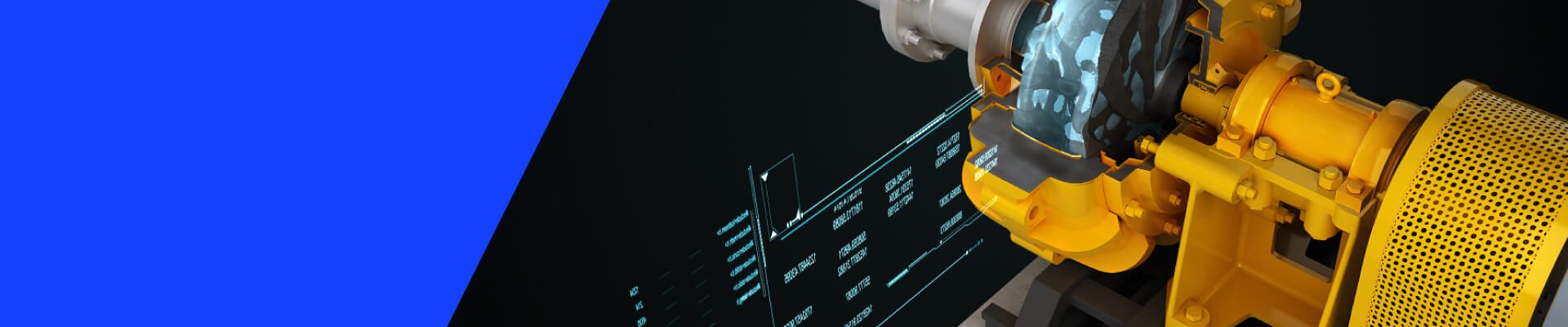
In modern drilling operations, understanding what a mud pump is — and how it performs — can mean the difference between a smooth operation and a costly failure. As global energy demand drives deeper and more complex wells, the mud pump has become one of the most critical pieces of equipment on any rig.
This guide covers everything from basic definitions to selection criteria, backed by industry data and hands-on application experience. Whether you're new to drilling systems or evaluating equipment for your next project, here's what you need to know:
- What a mud pump is and how it works
- The main types — duplex, triplex, and quintuplex
- Key industries and real-world applications
- How to select the right pump for your operation
- Maintenance practices that extend service life
Choosing the right mud pump isn't just a technical decision — it's an operational one. Read on to build a clear, practical understanding of one of drilling's most essential components.
The Basic Definition of a Mud Pump
A mud pump is a high-pressure, positive displacement pump. Its job: keep drilling fluid moving — continuously, reliably, under extreme conditions.
In oil and gas drilling, that fluid is called "drilling mud." Not just dirty water — it's a carefully engineered mix of water, clay, and chemicals, designed to do several critical jobs at once.
Picture a drill bit cutting through rock 3,000 meters underground. Heat builds. Rock chips pile up. Pressure rises inside the wellbore. Without constant fluid circulation, the operation grinds to a halt — or blows out.
The mud pump is what keeps that fluid moving. Every second. Every stroke.
Think of it as the heart of the drilling system. The drill string is the artery. The mud is the blood. The pump keeps everything circulating.
What Does Drilling Mud Actually Do?
Drilling mud serves four core functions on every job:
| Function | What It Means in Practice |
|---|---|
| Cool & Lubricate | Reduces heat and friction at the drill bit |
| Carry Cuttings | Lifts rock chips from the bottom of the well to the surface |
| Control Pressure | Balances formation pressure to prevent blowouts |
| Stabilize the Wellbore | Prevents borehole walls from collapsing |
None of this works without continuous circulation — and that's exactly what the mud pump delivers.
Why Can't You Just Use a Regular Pump?
A centrifugal pump handles clean, low-viscosity fluids. Drilling mud is the opposite: thick, abrasive, full of solids. Run it through a centrifugal pump and the impeller wears out fast.
A mud pump uses pistons or plungers — pushing fluid by mechanical force, stroke by stroke. Like a syringe: no matter how thick the liquid, the plunger forces it through. That's positive displacement — and that's what makes a mud pump irreplaceable.
How Does a Mud Pump Work?
A mud pump runs on a simple but powerful principle: convert rotational motor power into back-and-forth piston motion — and use that motion to force fluid through the system.
Every pump has two main sections working together.
Power End & Fluid End
The Power End is the mechanical side. A motor — electric or diesel — drives a crankshaft. The crankshaft moves the pistons back and forth through a crosshead mechanism. Raw power becomes linear motion.
The Fluid End is where that motion meets the mud. Pistons push into cylinders lined with wear-resistant liners. Valves open and close in sequence to control flow direction. The result: high-pressure fluid moving exactly where it needs to go.
Each stroke has two phases:
Suction: Piston pulls back → pressure drops → mud is drawn in from the tank.
Discharge: Piston pushes forward → pressure spikes → mud is forced down the drill string at up to 7,500 psi.
This cycle repeats hundreds of times per minute, non-stop, for the entire duration of drilling. That's why component quality — liners, valves, seals — matters so much. One worn part disrupts the whole rhythm.
Duplex, Triplex, or Quintuplex — Which Type Do You Need?
The number of pistons changes everything: flow smoothness, pressure capability, and where the pump belongs. Here's how they compare.
| Type | Pistons | Max Pressure | Best For |
|---|---|---|---|
| Duplex | 2 | ~3,000 psi | Shallow wells, low-cost operations |
| Triplex | 3 | ~7,500 psi | Most oil & gas drilling, standard choice |
| Quintuplex | 5 | ~10,000 psi | Deep wells, precision drilling |
More pistons means smoother flow and less pressure pulsation — which matters a lot in deep, sensitive formations.
Why Triplex Dominates the Industry
Walk onto almost any modern drilling rig and you'll find a triplex pump. Three pistons deliver overlapping discharge strokes, which keeps flow consistent and vibration low. They're compact, powerful, and easier to maintain than a quintuplex.
For most onshore and offshore drilling operations, the triplex is the default — and for good reason. It handles depths up to several thousand meters without breaking a sweat.
Duplex pumps still have a place on smaller rigs or budget-sensitive projects. Quintuplex units are reserved for ultra-deep or high-precision applications where pulsation control is critical.
Where Are Mud Pumps Used?
Mud pumps were born in the oilfield — but they've spread far beyond it. Any industry that needs to move thick, abrasive, or solid-laden fluid under pressure is a candidate.
Oil & Gas Drilling
This is the core application. Onshore rigs, offshore platforms, deepwater wells — all rely on mud pumps to circulate drilling fluid continuously. A pump failure here doesn't just slow things down. It stops everything.
Horizontal Directional Drilling (HDD)
HDD crews use mud pumps to keep boreholes lubricated and push cuttings back to the surface during trenchless pipeline installation. The terrain changes. The pump keeps up.
Construction & Mining
Tunneling, foundation drilling, dewatering — all generate slurry that needs to move. Mud pumps handle the muck that would destroy a standard pump in hours.
Wastewater & Municipal Systems
Sludge, grit, and industrial effluent aren't kind to equipment. Mud pumps are built for exactly this kind of punishment — moving material that clogs, corrodes, and wears everything else down.
Mud Pump vs. Other Pump Types: Key Differences
Before committing to a mud pump, it's worth understanding what sets it apart — and why substitutes often fail.
Mud Pump vs. Centrifugal Pump
Centrifugal pumps use a spinning impeller to move fluid. They're efficient, affordable, and everywhere. But they have a fundamental weakness: performance drops sharply as fluid viscosity increases.
Drilling mud is thick. Abrasive. Full of solids. A centrifugal pump fighting that kind of fluid loses pressure fast — and the impeller wears out in days, not years.
Mud pumps don't rely on impeller speed. They push fluid by mechanical force. Viscosity doesn't change the math. Pressure stays consistent whether the fluid is thin or dense.
Mud Pump vs. Trash Pump
Trash pumps handle water with debris — construction runoff, flooded basements, mild slurry. They're centrifugal at heart, just with wider passages to avoid clogging.
Put actual drilling mud through a trash pump and the result is predictable: rapid wear, pressure loss, early failure. They're simply not built for high-viscosity, high-pressure work.
| Mud Pump | Centrifugal Pump | Trash Pump | |
|---|---|---|---|
| Mechanism | Positive displacement | Rotodynamic | Rotodynamic |
| Max Pressure | Up to 7,500 psi | Low–medium | Low |
| Handles Viscous Fluid | Yes | Poor | Poor |
| Abrasion Resistance | High | Low | Medium |
| Typical Application | Drilling, mining, HDD | Clean fluid transfer | Site dewatering |
The right pump for the job isn't always the cheapest or most familiar — it's the one built for the fluid you're actually moving.
What to Consider When Selecting a Mud Pump
The wrong pump costs more than the right one — in downtime, repairs, and failed operations. Here's what to evaluate before you buy.
Pressure & Flow Requirements
Start here. What pressure does your application demand? What flow rate do you need to maintain? A shallow HDD bore and a 4,000-meter oil well have very different answers.
Always add a 10–20% buffer above your peak values. Real-world conditions are rarely ideal.
Fluid Characteristics
Not all drilling mud is the same. Consider:
- Viscosity — how thick is the fluid?
- Solids content — how abrasive?
- Chemical composition — corrosive additives?
Each factor affects liner material, valve design, and seal selection. Get this wrong and wear rates skyrocket.
Drive Type: Electric vs. Diesel
Electric drives are quieter, cleaner, and lower maintenance — ideal for onshore sites with stable power supply. Diesel units are self-contained and built for remote locations where the grid doesn't reach.
Offshore platform? Electric is standard. Remote jungle drill site? Diesel is your only option.
Think Beyond the Price Tag
A cheaper pump with expensive spare parts — or poor local service support — rarely saves money over time. Factor in:
- Spare parts availability
- Expected service intervals
- Manufacturer support in your region
A pump running at 3,000 meters down is not the place to discover that replacement liners take six weeks to ship.
Maintenance Tips to Extend Mud Pump Service Life
Mud pumps work in brutal conditions. The difference between a pump that lasts 15 years and one that fails in 18 months usually comes down to maintenance discipline.
Watch the Wear Parts
Liners, pistons, valves, and seats take the most abuse. Inspect them regularly. Replace them on schedule — not after failure.
A worn valve doesn't just reduce efficiency. It allows backflow, creates pressure spikes, and accelerates damage to every component around it. One neglected part triggers a chain reaction.
Prevent Cavitation
Cavitation happens when the pump tries to pull in more fluid than the suction line can supply. The result: violent pressure fluctuations that pit and erode internal surfaces.
Keep suction lines properly sized. Maintain adequate fluid levels in the tank. Monitor suction pressure consistently.
Control Vibration & Alignment
Excessive vibration loosens connections, fatigues metal, and wears out bearings prematurely. Check mounting bolts regularly. Keep the pump properly aligned with its drive system.
Use Smart Monitoring
Modern rigs integrate pressure sensors and flow monitors that flag abnormal readings in real time. An unexpected pressure drop at 2 AM is far easier to handle than a full pump failure at noon during peak drilling.
Log everything. Patterns in the data predict failures before they happen.
Conclusion
A mud pump is not a peripheral piece of equipment — it's the circulatory system of any drilling operation. Without it, nothing moves: not the cuttings, not the pressure control, not the drill bit cooling. Everything downstream depends on it.
Understanding what a mud pump is, how it works, and what to look for when selecting one isn't just technical knowledge. It's the difference between a well-run operation and an expensive one.
The right pump, properly maintained, runs reliably for over a decade. The wrong one — or the right one neglected — fails at the worst possible moment, thousands of meters underground.
Whether you're specifying equipment for a new rig, replacing aging components, or simply getting up to speed on drilling systems, the fundamentals covered here give you a solid foundation to work from.
Frequently Asked Questions
Q: What is a mud pump used for?
Mud pumps circulate drilling fluid through a wellbore during drilling operations. They keep the drill bit cool, carry rock cuttings back to the surface, and maintain pressure to prevent wellbore collapse or blowouts.
Q: What kind of fluid does a mud pump use?
Drilling mud — a mixture of water, clay, and chemical additives. The exact formula varies by formation, depth, and drilling conditions. Some applications use oil-based mud for deeper or more challenging wells.
Q: What are the main types of mud pumps?
The three most common are duplex (2 pistons), triplex (3 pistons), and quintuplex (5 pistons). Triplex pumps are the industry standard for most oil and gas drilling. Drive type — electric or diesel — is a separate classification based on power source.
Q: What are common mud pump problems?
Cavitation, worn liners, valve failure, and seal leaks are the most frequent issues. Most trace back to deferred maintenance or running the pump beyond its rated capacity. Catching wear early is almost always cheaper than an emergency repair mid-operation.
Further Reading
- 10 Popular Slurry Pump Manufacturers and Suppliers in Africa
- 10 Popular Slurry Pump Manufacturers and Suppliers in the USA
- 10 Popular Horizontal Pump Suppliers and Companies in the World
- 10 Popular Slurry Pump Manufacturers and Suppliers in China
- 10 Popular Slurry Pump Manufacturers and Suppliers in the World