
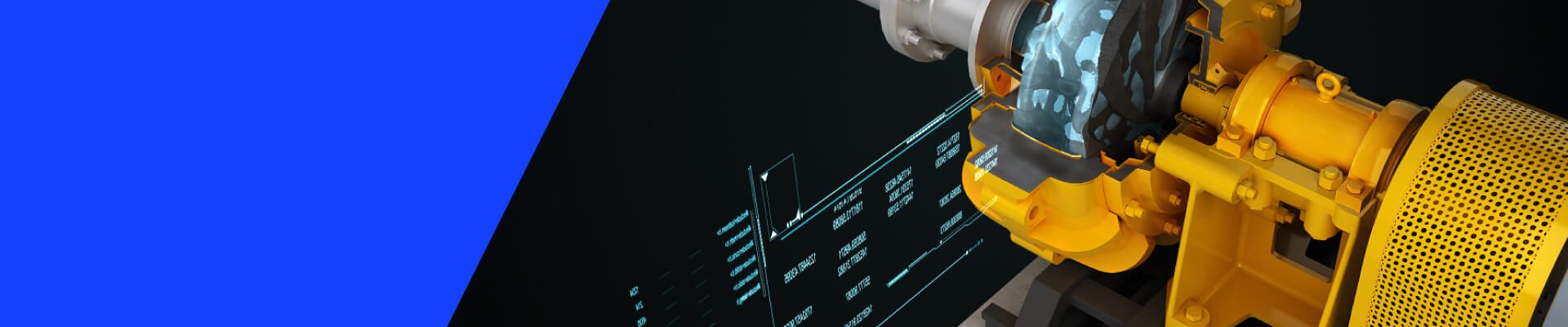
Effective slurry pump troubleshooting and maintenance can mean the difference between days of costly unplanned downtime and a well-run operation. According to industry data, pump failures account for up to 40% of unplanned downtime in mining and mineral processing plants — and the majority of those failures are preventable.
This guide addresses the most common slurry pump faults operators encounter: loss of discharge, excessive vibration, and shaft seal leakage. Each section explains the root cause, how to diagnose it quickly, and what corrective action to take. The global slurry pump market is projected to grow steadily through 2030, driven by expanding mining and chemical processing operations — making reliable pump maintenance more critical than ever. This guide is designed for:
- Maintenance engineers and technicians responsible for pump uptime
- Plant managers looking to reduce unplanned downtime and repair costs
- Procurement teams evaluating wear parts and replacement components
- Operations staff working with high-solids or abrasive slurry systems
Whether you manage a single pump or an entire fleet, understanding how to identify and address faults early is the most reliable way to extend service life and protect your operation — read on for the complete breakdown.
Table of Contents
- Common Slurry Pump Faults & Root Cause Analysis
- Fault Diagnosis Quick Reference
- Slurry Pump Maintenance Schedule
- Maintenance Schedule Summary
- Conclusion
- Frequently Asked Questions
Common Slurry Pump Faults & Root Cause Analysis
The three fault categories below account for the overwhelming majority of unplanned slurry pump stoppages across all industries.
1. No Discharge or Reduced Flow
Failure to discharge is encountered in virtually every industry that uses slurry pumps. It can appear on first commissioning, after an overhaul, or suddenly during normal operation.
On first start-up or after overhaul, the most common causes are insufficient sump level and incorrect shaft rotation direction. Always verify rotation against the arrow cast on the pump casing before running under load.
During normal operation, sudden loss of discharge is typically caused by one of the following:
(1) Blockage of impeller passages or inlet/outlet piping. Slurry often contains oversized particles, fibrous matter, or highly coagulative solids. When a passage blocks, the impeller can no longer transfer energy to the fluid. Symptoms: abnormal noise inside the pump casing and a noticeable drop in motor current.
(2) Cavitation. When inlet pressure falls below the vapour pressure of the slurry — due to a blocked suction line, a collapsed hose, or a sump running too low — vapour bubbles form and collapse violently inside the impeller. Symptoms: crackling or rattling noise, significant vibration, and erratic or spiking motor current.
(3) Progressive wear of wet-end components. Unlike blockage or cavitation, wear-induced flow loss is gradual. The impeller and liner surfaces thin over thousands of hours, increasing internal recirculation and reducing head. Motor current remains stable but low. The warning sign is a slow drift in delivered flow versus the pump's original performance curve.
Diagnostic tip: Compare real-time motor current against your commissioning baseline. A sudden drop points to blockage or cavitation. A slow, steady decline over weeks or months indicates wet-end wear.
2. Excessive Vibration
Some vibration is inherent in any rotating machine. What matters is whether levels stay within the limits specified in the pump's design documentation. Vibration above those limits shortens bearing life, fatigues shaft seals, and can loosen structural connections.
(1) Impeller imbalance. Slurry pump impellers are dynamically balanced at the factory. Over time, abrasive wear removes material unevenly, or scale accumulates asymmetrically, shifting the mass centre off the rotational axis. The resulting centrifugal force rises with the square of shaft speed — even a few grams of imbalance at 1,500 rpm generates meaningful vibration.
(2) Loose anchor or casing bolts. Once a bolt works loose, that restraint point disappears, vibration amplitude rises, and further loosening accelerates — a self-reinforcing cycle. Check and re-torque all anchor and casing bolts at every scheduled inspection.
(3) Insufficient or degraded bearing lubrication. The oil film in a rolling-element bearing both separates metal surfaces and acts as a vibration damper. If oil level is too low, viscosity is insufficient for the operating temperature, or the oil is contaminated with water or slurry ingress, the film breaks down. Metal-to-metal contact generates heat, noise, and vibration — and bearing failure follows rapidly.
3. Shaft Seal Leakage
Shaft seal leakage accounts for more than 80% of pump failures in petrochemical applications and is a leading cause of unplanned downtime across slurry-handling industries. Abrasive solids leaking past the shaft seal rapidly erode nearby components and can contaminate the bearing housing.
More than 65% of shaft seal failures originate from a single mechanism: scale build-up on the compression spring and cooling water passages. Hard-water scale stiffens or immobilises the spring, preventing it from maintaining correct closing force on the seal faces. Simultaneously, scaled cooling passages restrict flow, raise seal face temperature, and accelerate face wear.
The primary prevention measure is to treat or soften the cooling water supply to the shaft seal. Where water treatment is impractical, schedule periodic descaling at intervals matched to local water hardness.
Fault Diagnosis Quick Reference
The table below summarises symptoms, root causes, and corrective actions for the most common slurry pump faults.
| Fault | Observable Symptom | Root Cause | Corrective Action |
|---|---|---|---|
| No / reduced discharge | Zero or low flow; abnormal noise; motor current drops | Blocked impeller or piping; cavitation; worn wet-end parts | Clear blockage; raise sump level; inspect and replace worn liners or impeller |
| Excessive vibration | Vibration above design limit; increased noise; accelerated bearing wear | Impeller imbalance; loose anchor bolts; degraded bearing lubrication | Rebalance or replace impeller; re-torque all bolts; replenish or replace lubricating oil |
| Shaft seal leakage | Slurry or water visible at shaft exit; increased coolant consumption | Scaled compression spring or cooling passages; worn seal faces | Soften seal cooling water; descale spring and passages; replace seal faces |
| Motor overcurrent | Circuit breaker trips; motor runs hot | Blocked impeller; slurry density above design; shaft misalignment | Clear blockage; verify slurry SG against design data; check shaft alignment |
| Bearing overheating | Housing temperature exceeds 75 °C; oil discolouration | Over- or under-lubrication; wrong oil grade; contaminated oil | Drain and refill to correct level with specified grade; inspect seal for ingress |
Use motor current readings and temperature data together — they are the fastest way to narrow down a fault without disassembly.
Slurry Pump Maintenance Schedule
A structured maintenance programme — not reactive repair — is the most cost-effective way to operate slurry pumps. Adjust the intervals below based on your slurry abrasivity, solid concentration, and daily operating hours.
Daily Checks (Every Shift)
Verify oil level in the bearing bracket — it must be within ±2 mm of the oil-level mark. Check bearing housing temperature (target below 75 °C; investigate immediately above 80 °C). Observe the shaft seal area for any visible leakage. Listen for abnormal noise such as rattling, crackling, or rhythmic thumping, and note any change in motor current. Confirm sump level is within the required operating range.
Weekly Checks
Inspect all anchor bolts and casing fasteners; re-torque any that are below specification. Check flexible coupling condition and alignment. Verify that seal cooling water flow rate and pressure are within specification. Inspect inlet and outlet pipework for signs of erosion or leakage.
Monthly Checks
Compare delivered flow and discharge pressure against baseline commissioning data — a drop greater than 5% warrants a wet-end inspection. Inspect and clean the pump cavity and inlet pipe during any planned shutdown. Check vibration levels with a handheld meter and compare to your baseline. Apply thread-locking compound to any bolts that have required repeated re-torquing.
Periodic Overhaul (Every 2,000–3,000 Operating Hours)
Drain and replace bearing lubricating oil with the grade specified on the nameplate; shorten this interval in humid or high-temperature environments. Disassemble and measure impeller-to-casing clearance — adjust or replace worn components to restore design clearance. Descale the shaft seal spring and cooling water passages. Inspect liner wear surfaces and replace if wall thickness falls below the manufacturer's minimum. Flush all residual slurry from the casing and piping before any extended shutdown to prevent solids hardening inside the pump.
Shutdown reminder: If the pump will be idle for more than 24 hours, flush the casing, impeller passages, and all connected pipework with clean water. Hardened slurry deposits are one of the most common causes of impeller blockage on the next start-up.
Maintenance Schedule Summary
The table below provides a consolidated view of all maintenance tasks and their recommended intervals at a glance.
| Interval | Task |
|---|---|
| Every shift | Check oil level (±2 mm); bearing temperature (<75 °C); seal area for leaks; motor current; sump level |
| Weekly | Re-torque anchor and casing bolts; check coupling alignment; verify seal cooling water; inspect pipework |
| Monthly | Compare flow/pressure to baseline; clean pump cavity if possible; record vibration readings |
| Every 2,000–3,000 hours | Replace bearing oil; measure and restore impeller clearance; descale shaft seal; inspect and replace liners |
| Before extended shutdown | Flush casing, impeller passages, and pipework with clean water |
Post this schedule at the pump station — daily checks take less than five minutes and prevent the majority of bearing and seal failures.
Conclusion
Reducing slurry pump downtime starts with understanding why failures occur, not just how to fix them after the fact. The three fault categories covered in this guide — loss of discharge, excessive vibration, and shaft seal leakage — account for the vast majority of unplanned stoppages in industrial slurry-handling operations.
Structured daily, weekly, and periodic maintenance, combined with early recognition of the warning signs described above, is the most reliable path to maximising equipment availability and reducing total cost of ownership.
If you need guidance on selecting the right slurry pump for your application or sourcing wear-resistant components, our engineering team is ready to help.
Frequently Asked Questions
Why does my slurry pump lose prime during operation?
Loss of prime is most often caused by sump level dropping below the minimum required submersion depth, air ingestion through a loose or cracked inlet pipe joint, or a partially blocked impeller passage. Start by confirming sump level and checking the suction line for air leaks before shutting down to inspect the impeller.
How often should slurry pump bearings be lubricated?
Check oil level every shift. Perform a full oil change every 2,000–3,000 operating hours, or every three to six months — whichever comes first. In high-dust, high-temperature, or high-humidity environments, reduce the change interval by up to 50%.
What causes excessive vibration in a slurry pump?
The three most common causes are impeller imbalance from asymmetric wear, loose anchor or casing bolts, and insufficient bearing lubrication. Begin diagnosis by checking bolt torque and oil level — both can be verified in minutes without disassembly. If vibration persists, shut down and inspect the impeller for uneven erosion or scale build-up.
How do I know when to replace the impeller?
Replace the impeller when measured flow or differential head has declined more than 10–15% from the original design point and cannot be recovered by adjusting the impeller-to-casing clearance. Visible deep grooving, through-wall pitting, cracks, or severe asymmetric erosion are also definitive replacement indicators.
What is the difference between a packing seal and a mechanical seal?
Packing seals use compressed rings and require a controlled drip to lubricate the shaft sleeve — simpler and cheaper to replace, but they consume more flush water and need frequent adjustment. Mechanical seals use precision-lapped faces for near-zero leakage; they last longer between services but require cleaner flush water and more careful installation. For high-solids or abrasive slurries, a correctly specified mechanical seal typically delivers a lower total maintenance cost.
Further Reading
- 10 Popular Mining Pump Manufacturers and Suppliers in China
- 10 Popular Slurry Pump Manufacturers and Suppliers in the USA
- 10 Popular Horizontal Pump Suppliers and Companies in the World
- 10 Popular Slurry Pump Manufacturers and Suppliers in China
- 10 Popular Slurry Pump Manufacturers and Suppliers in the World